

1.1 Explain the aims and objectives of employment regulation.
An understanding of the concept “Employment regulation” is a better place to commence. Sargeant and Lewis (2001) defined
1.2 Describe the role played by the tribunal and courts system in enforcing employment law
Most employment laws are civil laws and they are upheld by some established judicial institutions. Honeyball (2014) listed five major judicial institutions that attends to employment related issues. They are The employment tribunals (ET); The Employment Appeal Tribunal (EAT); The Commission for Equality and Human Rights (CEHR); The Advisory, Conciliation and Arbitration Service (ACAS); and The Central Arbitration Committee (CAC).
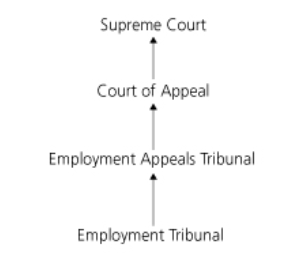
Figure 1.1: Judicial bodies addressing legal complaints
Source: ICS Learn (2021)
1.3 Explain how cases are settled before and during formal legal procedures.
American Bar Association (2019) asserts that only a few lawsuits especially civil cases follow through the whole range of legal procedures. A large chunk of these cases opt for mutual understanding before the suit is filed, before the trial begins, during the trial, or even after a clear verdict has been made. Once a dispute occurs, before the claimant heads to the Employment Tribunal (ET), there is a compulsory mandate to undergo the Early Conciliation Scheme (ECS) process.
2.1 Identify the main principles of discrimination law in recruitment and selection and in employment.
Discrimination laws commenced in the early 1970s to curb the rampant social issue of stereotyping in employment practices and policies occurring at that period. Discrimination according to Willeys et al (2012) is a concept focused on the exercise of choice which favours a particular person over another in a rather subjective and unlawful selection. In correcting this, several anti-discrimination legislations has evolved however a more relevant legislation in regards to the subject matter is the Equality Act 2010 which is a revised catalogue of previous enactments.
2.2 Explain how contracts of employment are established
The Contract of Employment became a subject of necessity ever since the establishment of “The Contracts of Employment Act 1963”. It expects employers to provide their employees with a written statement stating the conditions that surrounds employee’s terms of service within the first two month of being gainfully employed.
3.1 Describe when and how contracts can be changed lawfully.
Since change is a constant, employment contract is thus susceptible to changes overtime, especially when businesses in question are under pressure to compete effectively in the market; face government economic policies; adapt to a technological transition and achieve satisfactory standard of quality (Willey et al, 2012).
3.2 Explain the main requirements of redundancy law.
The Employment Right Acts 1996 (ERA 1996, s 139 (1)(a)) attributes redundancy as a justifiable reason for dismissal. The Acts defined “dismissal due to redundancy” as a dismissal that stems wholly or mainly from the fact that an employer has ceased or intends to cease to either proceed with business for the purpose of which such employer hired an employee or to proceed with business in the place where the employee was employed.
3.3 Explain the main requirements of the law on business transfers
The increasing rate of employee insecurity stemming from mergers and European Union’s single market gave rise to the Transfer of Undertaking (Protection of Employment) regulations in 2006, which was tailored to protect employee’s whenever there are business transitions through takeoff, merger or subcontracting (Willey et al, 2012).
4.1 Identify the major statutory rights workers have in the fields of pay, leave and working time.
Starting with pay which most economist agree to be an extrinsic reward that triggers employees to get the work involved in an employment relationship done effectively. Davies (2009) posits that major statutory right issues that pertains to pay has been fashioned to address economic and social issues.
4.2 Explain the major requirements of equal pay law.
Deakin and Morris (2009) stressed the need for equality in pay among male and female employees especially when they perform equal task or task equivalent in nature.
4.3 Explain major maternity, paternity and other family-friendly employment rights.
The growth trend of another social issue that centres around maintaining a balanced work-life engagement has spun the enactment of certain legislation to create a (near) equilibrium situation. One of these legislation is the Pregnant Workers Directives that specifically protects pregnant, recently given birth and breastfeeding employees from workplace risk.
5.1 Identify the major requirements of health and safety law.
Health and safety are essential concepts in operational management which plays a prime role in an employment relationship. Both roles are regulated by the Health and Safety Law Act 1974 and aimed at promoting health and safety standards in the workplace among employees in various aspects of work.
5.2 Explain the significance of implied duties as regards the management of employees at work.
This significance is inherent in the understanding of the implied duties of mutual trust and competence. Sargeant and Lewis (2001) opined that this particular duty ensures that neither of the parties involved in an employment relationship acts in a manner that infringes on their implied trust and confidence so as to enable the smooth execution of the existing contract of employment between them.
5.3 Explain the principles of the law on freedom of association
The Freedom of Association is a fundamental human right proclaimed by the Universal Declaration of Human Right (1948) that allows people to engage in whatever they please as long as their actions do not affect others.
6.1 Explain the main requirements of unfair dismissal law in respect of capability and misconduct issues.
A dismissal is branded ”unfair” when according to the Employee Relation Act 1996, the complainant often an employee still has a contract of employment with at least one year with an employer; dismissal is accessed to be unfair by the Act; reason for dismissal falls under an automatic unfair reasons as stipulated by the ERA 1996.
6.2 Explain the scope of the right for employees to be accompanied at serious discipline and grievance hearings.
Employee’s right during period of discipline and grievance hearing are well articulated in ACAS Code of Practice on Disciplinary and Grievance Procedures (2009). The code advocates for a less sterner approach like informal resolution to solving issues and supports the pursuit of a formal approach when the initial approach fails. Moving further, The code advices that organisational policies and disciplinary rules be clearly stated and made available to employees knowledge. Rules and procedure must be set in fairness and transparency.