

As a business owner, one important revelation is the understanding that businesses do not operate in a vacuum, rather businesses operate in an environment with elements capable of influencing their operations and profitability. This singular knowledge helps business owners spot, understand, and address elements that are favourable and those that are not. Several frameworks exist to identify external factors that influence a business however one of the most common and detailed strategic framework is the PESTLE analysis. This article aims to address the under-listed.
What is the meaning of PESTLE analysis?
What is a PESTLE analysis used for?
Advantages and Disadvantages of using PESTLE analysis.
Application of PESTLE analysis.
Before proceeding with this article, here is a list of services offered by Craig Educational Consult in order to improve your academic performance.
What is the meaning of PESTLE analysis?
PESTLE is an acronym created from the macro-environmental factors that can be grouped under Political (P), Economics (E), Social (S), Technological (T), Legal (L) and Environmental (E). The acronym is used in different variants – PESTEL or STEPLE but represent the same group of macro-environmental factors capable of influencing businesses. Starting with the P which represents political, it examines political related factors that can either affect a business positively and negatively.
Next, the first “E” denotes Economics and it is an umbrella word that embodies economic reasons that can cause a strain or elevate businesses. Think of any money-related factors, the likes of exchange rate, inflation, minimum wage, interest rate, income, unemployment, cost of living, tax rate to mention a few. Any or all of these can influence a business.
Using interest rate as an example, which refers to the cost of borrowing money. The value fluctuates over time but this is not the concern here. In a period where the interest rate is high, businesses avoid borrowing money for any operation because of the associated high returns of borrowing. On the other hand, businesses borrow money more when the interest rate is down.
The “S” signifies Social and encompasses a list of social related factors that influences the end users to make a purchase. This category is concerned with people’s values, habits, attitudes, and beliefs that trigger the adoption of a business product or service.
For instance, a certain religion forbid the consumption of Pig as their belief of pig is that it is unclean and should be avoided. Setting up a pig farming enterprise in areas where a significant per cent of the population practice this religion will result in low profitability and extinction of the business in the shortest possible time frame. A wrong move.
The “T” represents Technology. Without a doubt, technology is changing the nature of business operations and isn’t a factor that should be neglected. Technology reduces the production cost while increasing production efficiency. History reported that some companies in the late 1990s who failed to adopt digitalization have either gone into extinction or lost the leadership grip they once had. Blockbuster, Kodak, Nokia, BlackBerry, and MySpace are a few of the industrial leaders in the 1990s who are not remembered today except for their reluctance to adopt evolving technology leading to their demise.
The letter “L” in PESTLE stands for legal. Remember, it was stated earlier that businesses exist in an environment and influenced by the elements of the society. The law and legislation of the environment is an element a business is expected to abid by. It is businesses’ responsibility to spot which of the regulations is favourable to its operation and harness it while modifying those that are not favourable to its advantage.
Lastly, the second “E” represents the Environment. Businesses have the obligation to ensure their operations are not detrimental to the health of their surrounding environment. In another view, the environment often provides the natural resources an organization requires to carry out production. The proximity or accessibility to the raw materials in many ways foster profitability
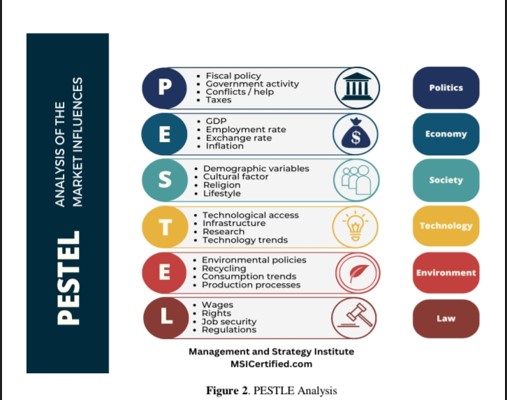
Figure 1: PESTLE ANALYSIS – ITS COMPONENTS
Source: Management and Strategy Institute
What is a PESTLE analysis used for?
PESTLE analysis as a strategic management tool serves two purposes. The first is to help businesses understand the environment they function in. The second is to provide data that help businesses predict the future situation likely to influence their operation.
Advantages of using PESTLE analysis.
Primarilly, PESTLE analysis provides businesses information regarding the nature of the macro-environment they operate in and the possible influences the environment may have now and in the future. Businesses use PESTLE to identify opportunities and threats and use both to their advantage. The information from PESTLE analysis aids businesses to develop a strategic plan and as well make data driven decisions that advances their productivity.
Risk management is another advantage of conducting a PESTLE analysis. Since the analysis points out the current and future threats to the businesses, business can prepare adequately to mitigate or avert the likely impact the forecasted threats. Finally, the analysis, if conducted painstakingly, provides organization with so much information that helps them time their entry and expansion into a new market.
Disadvantage of using PESTLE analysis
One of the major disadvantage of the PESTLE analysis is that the evaluation, dimension and measurement framework is only qualitative in nature. While PESTLE shows businesses the factors that affect their operation, It is impossible to objectively evaluate the factors that make up each category.
Again, adhering to the conceptual framework, a holistic approach is always recommended when conducting a PESTLE analysis. However, it is not possible as parameters assessed are usually done independently. More often, some parameters exert greater influence than other which makes organization focus on factors or sub factors with relative weight.
Finally, independent assessment of factors or sub factors may not be the actual reflection of reality. For instance, even if PESTLE points out that economic factors (Interest rate) may negatively influence on a business, reality may point out that economic factor is only a product of political factor (Government regulations).
Application of PESTLE analysis
In applying the PESTLE analysis, this article considered Google, the giant search engine platform. Google is a multinational conglomerate, hence in carrying out this analysis, the focus was on factors that influences Google’s operations irrespective of the location.
Politically, censorship in China has greatly affected Google for the past 15 years. The state government erected a great firewall to block the operation of the company’s search product in China. Unlike its dominance in western countries, Google does not stand a chance to compete with Chinese-owned products as they don’t even have access. This political factor serves as a threat which limits Google’s profitability in the region.
Read about the detailed analysis of Google here.
Conclusion
PESTLE analysis is a great strategic management tool. It shows the political, economic, social, technological, legal, environmental factors affecting businesses. These categories form the acronyms that creates PESTLE. The analysis is qualitative in nature which is considered as a limitation. The knowledge from these analysis help businesses harness opportunities and mitigate threats.
As a university student, if you constantly struggle with any aspect of your academic work (course work, assessments, tests, essays, assignments, research, analysis and writings), you can hire a private tutor at Craig Educational Consult to help improve your performance. If you know any student in need of these resources, direct them here